San Francisco
The Caine MutinySan Francisco is the story’s crucial port of return and departure: a place where Willie Keith’s naval life briefly meets his family and his relationship with May Wynn, and where the USS Caine is prepared for another Pacific deployment. The city offers a homecoming, but not a lasting escape from shipboard duty; its most important function is to make the next separation tangible.
Orders and Approach
San Francisco enters the story first through a change of command. A decoded message directs Lieutenant Commander Philip F. Queeg to the Anti-submarine Warfare School in San Francisco for training, after which he is to relieve the USS Caine’s commanding officer. For Willie, who has just joined a vessel whose cramped, overheated clipping shack makes sea duty feel immediately burdensome, the message is cause for conspicuous relief. The city is thus linked from the outset to the command transition that will shape his experience aboard the ship.
The Caine later approaches San Francisco after a punishing passage through rough seas. Willie has lost track of time amid watches, coding, corrections to publications, and sleep repeatedly interrupted by the ship’s motion. One morning he wakes to find the bunk steady. The vessel is moving through a channel between green banks, and he recognizes the piers of the Golden Gate Bridge beyond a hill. The change from an unstable ship and an exhausting routine to level water and the familiar approach to shore gives the return its force: San Francisco is first registered as a physical contrast to the sea before it becomes a place of reunion.
Homecoming and Personal Ties
When the gangplank is lowered, Willie is among the first to leave the ship. His mother waits at the foot of the gangway, with May beside her, her expression mixing gladness, confusion, and apprehension. Mrs. Keith embraces her son, while Willie gently disengages and takes both women’s hands. He introduces May as Marie Minotti. The wharf becomes the meeting point of the family life from which naval service has separated him and the romantic relationship he has carried through the deployment.
San Francisco also figures in the return journey from Yosemite Valley. On the bus, Willie and May travel through the Sierra scenery and then into the San Joaquin Valley. As the bus continues toward the city, Willie grows conscious that a serious conversation is approaching: San Francisco and the Caine lie at the end of the trip, but so does his mother. He asks May whether she has thought about their future. The location therefore connects the private intimacy of their excursion with the practical family and naval circumstances awaiting them; the return to shore brings questions about a shared life into the same frame as Willie’s obligations.
Overhaul and the Next Deployment
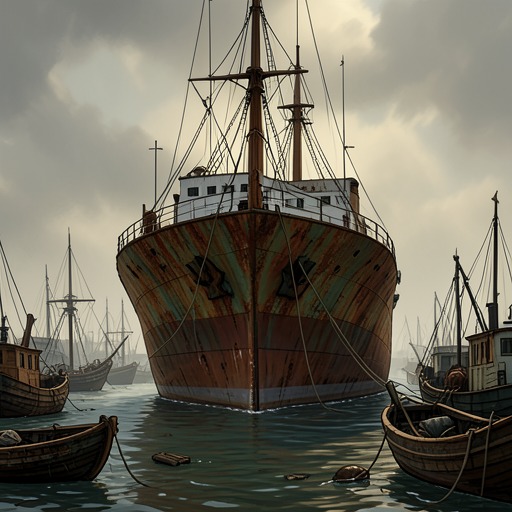
The city is not only a destination for leave and reunion. The Caine undergoes overhaul in San Francisco, where yard workers disassemble and then hastily reassemble the aging ship. Some of the worst decay in the engineering plant is patched, and new radars are installed, but the repairs do not transform the vessel into a sound new ship. It remains much as it was: worn and in need of care. The overhaul period is also cut short, for reasons no one aboard knows. Tom Keefer speculates that the ship has been repaired only enough to survive one more invasion, but the novel presents that as his theory rather than an official explanation.
On December 30, the USS Caine leaves through the Golden Gate. About twenty-five crew members have chosen court-martial for missing ship rather than another cruise with Queeg. Willie is on the bridge as the ship departs, aware that he and May are facing a long separation and that many miles and likely battles lie ahead before the vessel returns to these waters. The departure reverses the earlier homecoming: the same port that briefly reunited Willie with May now marks the beginning of their absence from one another. A more comfortable bunk than his former clipping-shack berth offers Willie some immediate relief, but it does not change the larger fact that San Francisco has become the threshold to another tour at sea.
Narrative and Historical Context
The city’s recurring role gives the naval plot a shore-based measure of time. Orders send Queeg there before he takes command; the Caine brings Willie back to its waters; Willie’s meeting with May and his family occurs on the wharf; and the ship departs after its shortened overhaul. These movements distinguish homecoming from home. San Francisco supplies familiar people, land, and the possibility of private plans, but the ship’s departure repeatedly places those possibilities under the pressure of military service.
The novel’s prefatory note explicitly identifies the work as fiction set during World War II. It warns that times and places associated with actual operations, ship names and missions, and naval communications have been altered, and states that the Caine and the people and events aboard it are imaginary. San Francisco is a real setting within that fictional design, but the Caine’s orders, overhaul, arrival, and departure should not be treated as a documentary account of an actual vessel or operation.